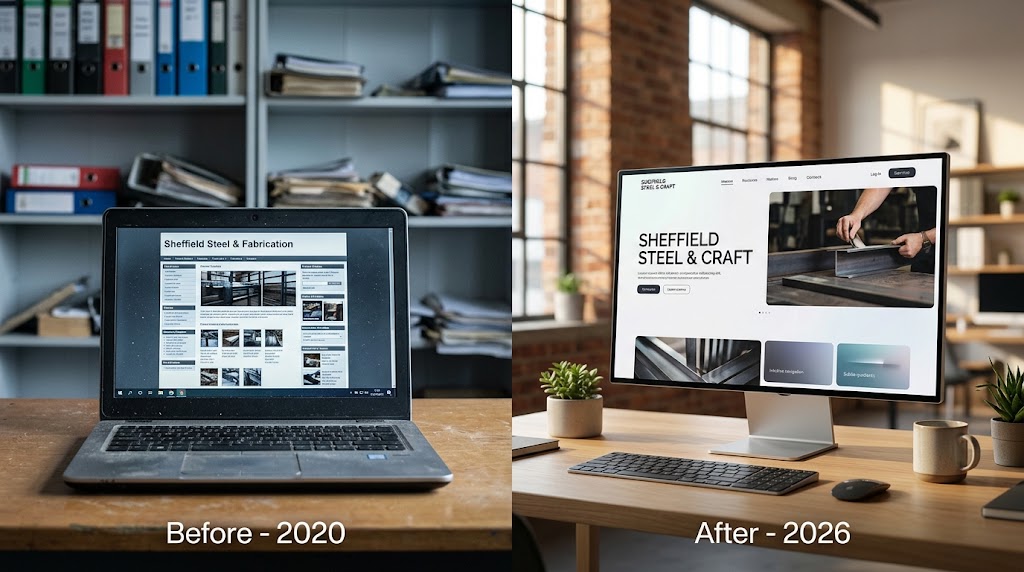
Many South Yorkshire businesses are still running websites that quietly cost them enquiries every month because they have not been properly updated or redesigned in years.
Most South Yorkshire businesses should review their website at least once a year and plan a meaningful update or redesign every three to five years. The exact timing depends on performance, technology changes, business growth and how well the current site supports mobile users, search visibility and enquiries. Leaving a site untouched for too long usually leads to slower load times, outdated design, weaker search performance and fewer leads.
Key Areas We Will Cover:
- Why websites need regular attention
- Recommended review and redesign timelines
- Signs it is time to update or redesign
- The difference between small updates and a full redesign
- How business growth and technology changes affect timing
- Practical steps to stay ahead without constant rebuilds
- Frequently asked questions
Why Leaving Your Website Alone Quietly Costs You
A website is not a static brochure. Technology, user expectations, search algorithms and AI systems all evolve. What felt modern and effective three or four years ago can now feel slow, cluttered or untrustworthy. Visitors notice when a site looks dated or struggles on mobile. Search engines and answer engines notice when content structure, speed and relevance fall behind. The result is fewer visits, lower engagement and missed enquiries across Doncaster, Sheffield, Rotherham, Barnsley and the wider region.
Recommended Timelines for South Yorkshire Businesses
A light review once a year is sensible for almost every local company. This check should cover speed, mobile performance, broken links, outdated content and basic security. A more substantial refresh or redesign is typically needed every three to five years. Businesses that grow quickly, change their services, or operate in competitive sectors may need to act sooner. Companies with very simple brochure sites that still perform well can sometimes stretch the redesign cycle closer to five or six years, provided ongoing maintenance keeps the site healthy.
Clear Signs It Is Time to Act
Several warning signs indicate an update or redesign is overdue. The site loads slowly on mobile phones. Design feels outdated compared with local competitors. Key information is hard to find. Contact forms or calls to action are weak or missing. Content no longer matches the services you actually offer. Analytics show declining traffic or rising bounce rates. The content management system is difficult to use or no longer supported. Any one of these issues is worth addressing. Several together usually mean a more thorough project is required.
Small Updates Versus a Full Redesign
Not every improvement needs a complete rebuild. Content updates, new service pages, improved calls to action, speed optimisations and minor design tweaks can be handled as ongoing maintenance. A full redesign becomes the better option when the underlying structure, technology or user experience is no longer fit for purpose. Choosing the right level of work saves money and avoids unnecessary disruption while still delivering meaningful results.
How Growth and Technology Influence Timing
Business growth often creates new website needs. Extra services, new locations, larger teams or e commerce requirements can stretch an older site beyond its original design. At the same time, changes in mobile usage, Core Web Vitals standards, accessibility expectations and AI search behaviour raise the bar for what a professional website must deliver. Staying aware of both your own business changes and wider digital shifts helps you plan updates at the right moment rather than reacting to problems after they have already cost enquiries.
Staying Ahead Without Constant Rebuilds
The most efficient approach combines regular light maintenance with planned larger improvements. Annual reviews catch small issues early. Scheduled content refreshes keep information accurate and useful. Performance monitoring prevents speed problems from building up. When a redesign is needed, a clear brief and realistic timeline keep the project controlled. This steady rhythm protects the investment already made in the website and ensures it continues to support the business rather than hold it back.
Conclusion:
There is no single perfect number of years that applies to every South Yorkshire business. A yearly health check combined with a meaningful update or redesign every three to five years works well for most companies. Paying attention to performance, user experience and business changes allows you to act at the right time. A website that stays current continues to generate enquiries, supports search and AI visibility, and reflects the professionalism of the business behind it.
Ready to review your current website
If you are unsure whether your site needs a light update or a more substantial redesign, get in touch. We will give you clear, practical recommendations based on your specific situation. You can also learn more about our website design and development service for South Yorkshire businesses.
FAQ
Important pages such as services, about and contact information should be reviewed at least once a year. Blog posts, news and offers can be updated more frequently to keep the site fresh and useful.
Yes. Consistent maintenance, content improvements and performance optimisations can extend the useful life of a well built website. However, they cannot permanently overcome fundamental problems with structure, technology or design.
Both approaches can work. Gradual improvements suit sites that are still fundamentally sound. A complete redesign is usually cleaner and more effective when the existing site has multiple serious limitations.
Not necessarily. A carefully planned redesign can protect and even improve rankings by retaining valuable content, improving structure and enhancing performance. Proper redirects and technical planning are essential.
Start with an honest review of speed, mobile experience, clarity of information and enquiry conversion. Professional feedback can then confirm whether light updates or a fuller project will deliver the best return.